Why Your Cheap Razor Is Costing You More Than a Professional Bikini Wax

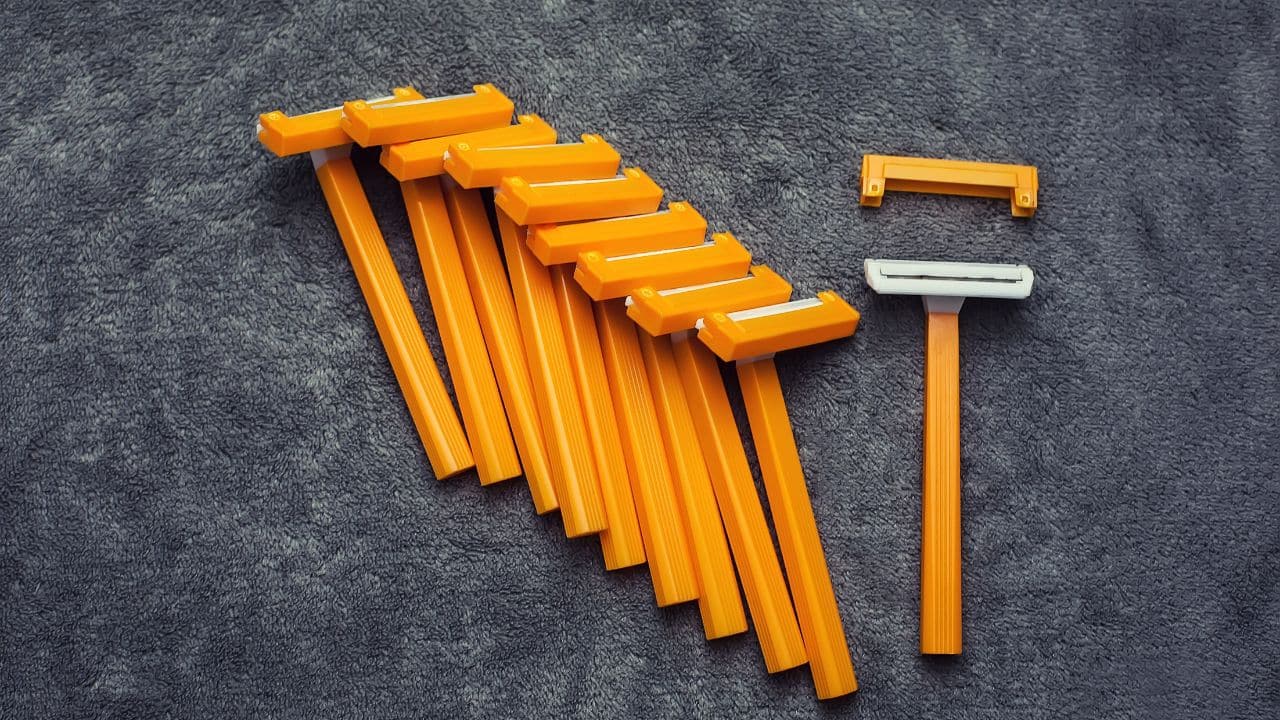
The cost of a cheap razor vs. professional bikini waxing usually gets settled at the checkout counter, where a drugstore razor looks like the easy win over a studio visit. That comparison misses most of the ledger. The real cost of a cheap razor shows up later, in injury rates, in the hours you spend keeping up with regrowth, and in the skin problems a licensed esthetician helps you sidestep.
Below, you will find the full picture: what each method does to your skin, how a year of shaving compares with a year of waxing on time and comfort, where laser really fits, and what Nevada law asks of the person holding the wax stick. If you are still choosing a service, start with the difference between a bikini wax and a Brazilian wax.
Key Takeaways:
- Razors account for 83% of grooming injuries presenting to US emergency departments, with a 25.6% injury rate among those who groom pubic hair
- Shaving is cheaper up front, but professional waxing saves roughly 4.6 hours a year and spares you the razor injury rate
- Professional hard wax adheres only to hair rather than skin, reducing trauma in sensitive bikini areas compared to soft wax or shaving
- Waxing works on every hair color and skin tone, unlike laser, and needs no medical supervision under Nevada law
- Nevada licensed estheticians complete 600 hours of training for waxing services, while laser requires advanced licensure with medical supervision
Cost of Cheap Razor vs. Professional Bikini Waxing Starts With the Removal Method
Several methods exist for bikini and pubic hair removal, each working a little differently. They range from surface-level shaving to permanent follicle destruction through electrolysis.
Temporary methods include shaving, depilatory creams, and waxing. Laser and electrolysis target the follicle itself. The table below sets out how each works.
Method | How It Works | Results Last | Permanence |
Shaving | Blade cuts the shaft at the skin surface | 1 to 3 days | None |
Depilatory cream | Thioglycolates dissolve keratin bonds | 2 to 5 days | None |
Soft wax | Adheres to hair and stratum corneum, strip removal | 3 to 5 weeks | None |
Hard wax | Shrink-wraps hair only, releases without a strip | 3 to 5 weeks | None |
Sugaring | Paste removes hair with the growth direction | 3 to 5 weeks | None |
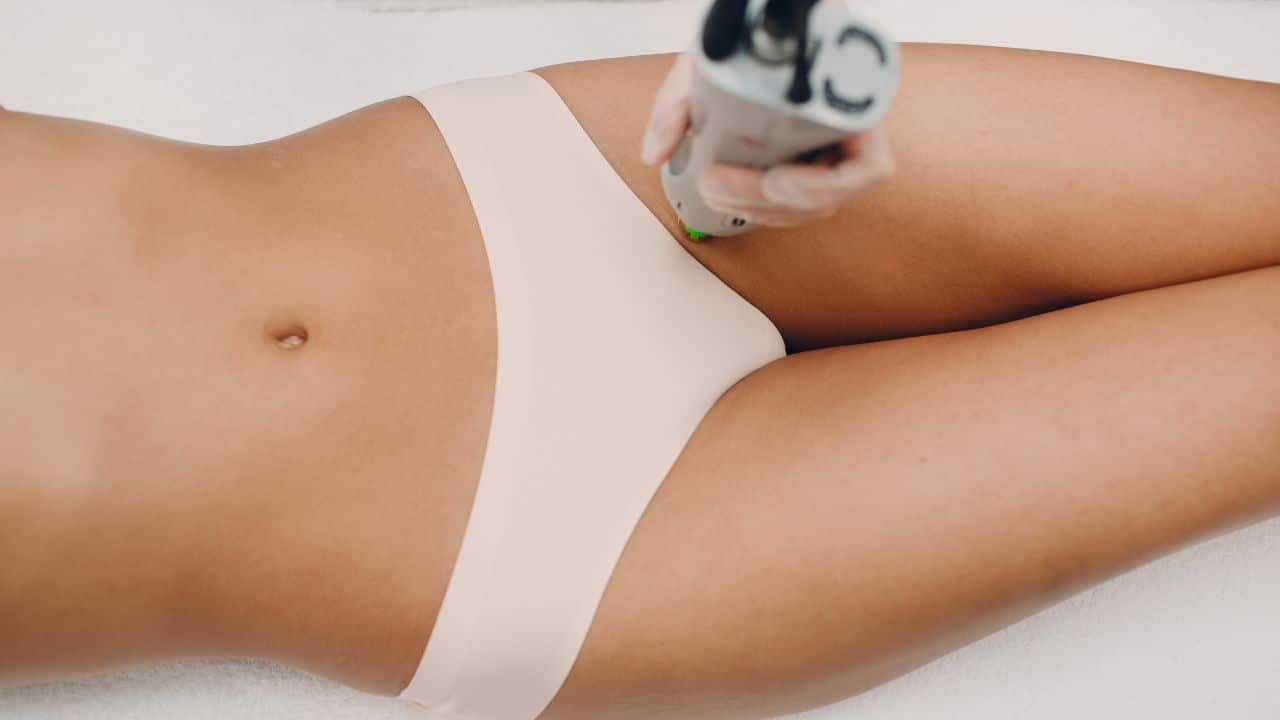
Laser | Selective photothermolysis heats melanin in the follicle | Months, then maintenance | Reduction only |
Electrolysis | Probe delivers current that destroys the follicle | Indefinite | FDA-recognized removal |
Shaving Cuts Hair at the Skin Surface and Triggers Ingrown Hairs
Shaving cuts the hair shaft at or just below the skin surface, leaving a blunt-angled tip. Tightly curled hair cut by shaving can re-enter the skin through extrafollicular or transfollicular penetration.
Pseudofolliculitis pubis occurs after pubic hair is shaved, creating inflammatory reactions. This mechanical problem stems from follicle curvature rather than shaving technique.
Soft Wax, Hard Wax, and Sugaring Differ in How They Grip Hair
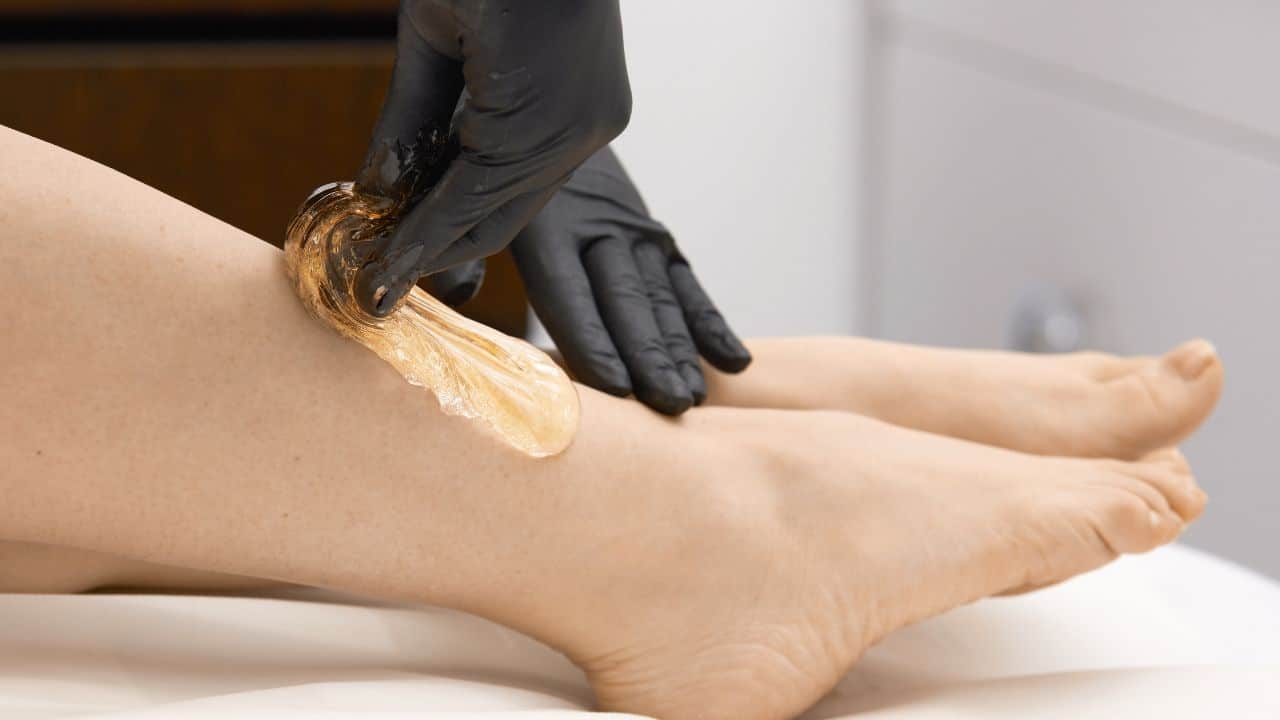
Soft wax adheres to both hair and stratum corneum and requires a cloth strip for removal. Hard wax is formulated for cohesive adhesion to hair alone and releases without a strip, which is the core difference between hard wax and soft wax.
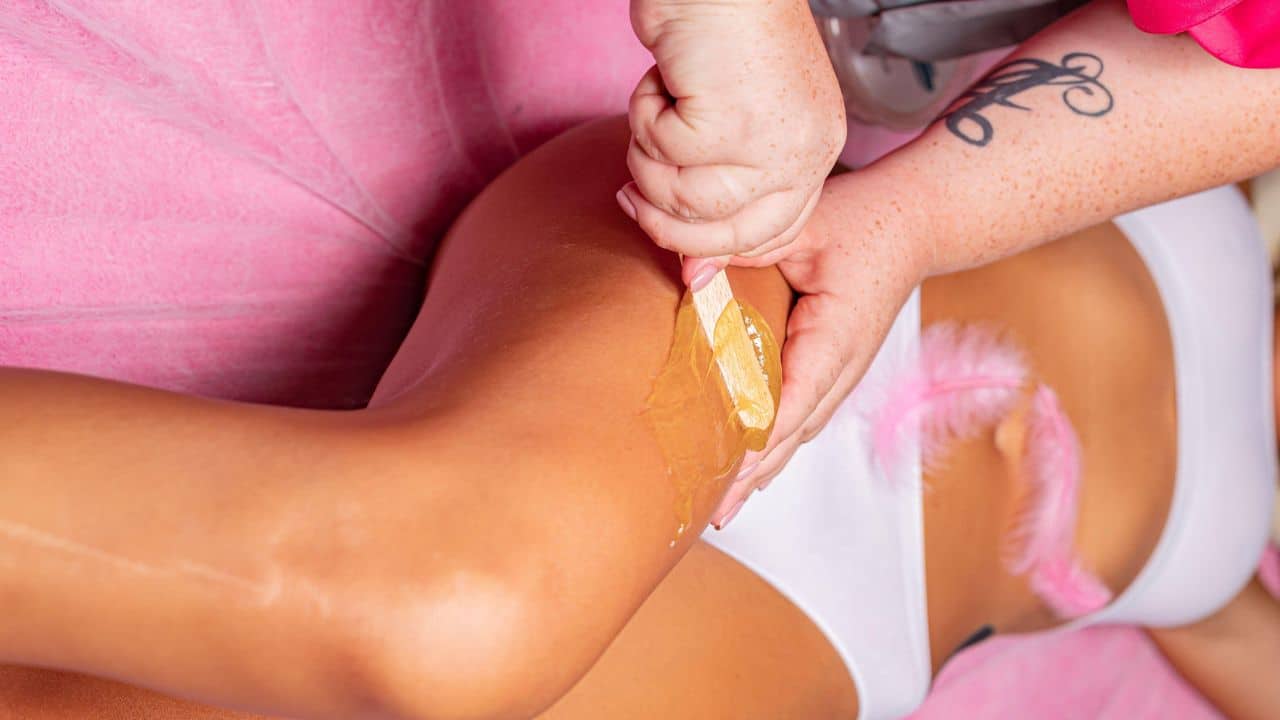
Sugaring paste removes hair in the direction of growth and captures hairs at approximately 1/16 inch versus 1/4 inch for waxing.
Laser and Electrolysis Target the Follicle Itself
Selective photothermolysis is how the laser targets melanin. Light at 755nm (alexandrite), 810nm (diode), or 1064nm (Nd: YAG) is absorbed by melanin in the hair shaft and bulb, then converted to heat. Electrolysis instead inserts a fine probe into each follicle and uses current to destroy the root, which is why it is the only method the FDA recognizes for permanent hair removal.
Cost of Cheap Razor vs. Professional Bikini Waxing Includes Safety and Skin Sensitivity
Safety profiles vary across methods. A nationally representative survey of 7,570 US adults found that injury prevalence varies by method and demographics. Mechanical methods carry higher acute injury risk, while chemical and thermal methods present burn and pigmentation concerns. Licensed professionals reduce these risks through training and technique.
Razor Injuries and Pseudofolliculitis Pubis Carry Documented Risks
Razors account for 83% of grooming injuries presenting to US emergency departments between 2002 and 2010. Weighted injury prevalence among people who groom pubic hair stands at 25.6%, with women reporting injuries at 27.1% versus 23.7% for men.
Laceration was the most common injury at 61.2%, followed by burns at 23.0% and rashes at 12.2%. Among injured respondents, 66.5% had been injured more than once. Pseudofolliculitis barbae is a mechanical problem where cut hairs re-enter the skin, and professional waxing helps with folliculitis caused by shaving. Aftercare matters too, so review how to avoid ingrown hairs after a bikini wax.
Depilatory Creams and Waxing Differ in Potential Skin Trauma
Depilatory creams dissolve hair using thioglycolates, with sodium or calcium hydroxide raising the pH to potentiate the reaction. Thioglycolates disrupt disulfide bonds with affinity for cystine, and hair keratin contains more cystine than skin.
The margin between a working depilatory and a burning one is simply time on skin. Soft wax produces a shear force that lifts some outermost skin cells. At one burn center, 21 patients were treated over roughly 20 years for burns from microwave-heated wax at home.
Contraindications to Note Before Hair Removal
The American Academy of Dermatology advises no waxing during oral isotretinoin treatment and for six months after stopping. FDA labeling extends the same six-month wait to dermabrasion, laser, and chemical peels.
Depilatories should not be used on eyebrows, around the eyes, or on inflamed or broken skin. Any tan must fade completely before laser is safe, and pregnancy is listed as a reason to avoid laser hair removal.
Shaving and Professional Bikini Waxing Costs and Time Commitments Compared
Shaving does cost less in raw dollars, especially in the first year. Where professional waxing pulls ahead is everywhere else: fewer hours lost, far fewer injuries, and weeks of smooth skin instead of a day or two. The table below sets the two side by side.
Annual Comparison | Cheap Razor (Shaving) | Professional Bikini Waxing |
Direct product or service cost | Lower in raw dollars | Higher up front, about 30% less with the Maintenance rate |
Visits or sessions per year | About 156 shaves | 13 appointments |
Smooth days per cycle | 1 to 3 days | 3 to 5 weeks |
Hours spent per year | Higher by about 4.6 hours | Lower, travel time included |
Documented injury share | 83% of ER grooming injuries | 2.6% of grooming method use |
Performed by | You, unassisted | Licensed esthetician, 600 training hours |
The True Total Cost of Using a Cheap Razor for Shaving
The price of the razor is only the start. Shaving the bikini area a few times a week burns through cartridges fast, because the curves and contours dull a blade quickly. What looks cheap at the register keeps asking for more.
Then come the extras: shaving cream, post-shave moisturizer, and the ingrown-hair products almost every regular shaver ends up buying. None of it is much on its own. It just never stops, month after month, year after year.
Professional Bikini Waxing Cuts Annual Grooming Time and Injury Rates
A Brazilian wax runs about 25 to 60 minutes once you count travel, and new clients start at just $30. You walk out smooth for weeks rather than a day or two. If you have never booked one, a first Brazilian wax has its own prep, timing, and comfort expectations.
Women report grooming injuries more frequently than men at 27.1% versus 23.7%, with non-electric razors at 47.5% usage. Electric razors account for 26.9%, scissors 18.4%, wax 2.6%, and electrolysis or laser only 0.6%.
What Waxing Wins Once You Look Past the Price Tag
Cost is the one place shaving keeps an edge, and that edge shrinks the moment the consumables pile up. Everywhere that matters for your skin, waxing comes out ahead.
The real payoff of a professional bikini wax is in safety and time, not the sticker price. Research on shaving drawbacks compared to waxing points to much higher injury rates, with 1.4% of cases serious enough to need medical attention.
How Brazilian Waxing and Brazilian Laser Really Compare
Laser often gets sold as the long-term money-saver, but the picture is messier than the ads suggest. The evidence for its staying power only runs to about 12 months, since the FDA measures permanent hair reduction at 6, 9, and 12 months after a course finishes. Past that, it comes down to maintenance no one can fully predict.
Factor | Professional Waxing | Brazilian Laser |
Hair colors it works on | Every color | Only dark hair with melanin |
Skin tones it suits | All tones | Higher risk on deeper skin |
Who can perform it in Nevada | Licensed esthetician | Advanced license plus medical supervision |
Permanent Hair Reduction Has a Specific FDA Definition
Per FDA 510(k) clearance, permanent hair reduction means the long-term stable reduction in hair regrowth when measured at 6, 9, and 12 months after a treatment regimen is completed. The measurement window terminates at 12 months.
Most patients see some regrowth, according to the American Academy of Dermatology. Not all follicles sit in active growth phase during a treatment series, and dormant follicles may activate later through hormonal changes.
Laser Takes a Full Course of Sessions Plus Upkeep
A full laser course runs about eight sessions spread over months, and most people still need touch-ups once or twice a year afterward. That is a bigger time and scheduling commitment than a quick standing wax appointment.
Skin Type and Hair Color Determine Laser Effectiveness
Alexandrite 755nm lasers show high melanin absorption and suit Fitzpatrick types I through III with dark coarse hair. Diode lasers at 800 to 810nm penetrate deeper with less melanin absorption, broadening safety to types II through IV. Nd: YAG at 1064nm bypasses epidermal melanin and is the safest choice for types IV through VI.
The AAD confirms laser will not work on blonde, white, grey, or red hair, which carries little to no melanin to target.
Nevada Regulatory and Licensing Factors for Hair Removal Services
Nevada licensing statutes set scope boundaries between standard estheticians, advanced estheticians, and medical professionals. Senate Bill 249 revised these rules in 2023, clarifying device restrictions. The boundaries help you identify a properly qualified provider.
Licensed Esthetician Scope of Practice Covers Waxing but Not Laser
Nevada statute NRS 644A.075 defines esthetics to include hair removal by depilatories, waxing, tweezers, or sugaring. Laser is not listed. The state esthetician examination requires a minimum of 600 training hours before licensure, and Senate Bill 249 prohibits estheticians and cosmetologists from using esthetic medical devices, including lasers.
Medical Supervision Governs Advanced Esthetic Laser Procedures
An advanced esthetician in Nevada may perform nonablative esthetic medical procedures only under the supervision of a health care professional, who must be within sixty miles or sixty minutes and remain readily available.
Laser hair removal, therefore, sits behind both advanced licensure and medical oversight. Standard esthetician scope excludes laser devices entirely under current Nevada law.
Training Requirements and FDA Clearance Limitations to Consider
FDA-cleared status means Class II devices went through 510(k) premarket notification establishing substantial equivalence, not premarket approval. Multiple laser clearances state explicitly that no clinical study was included in the submission.
Device clearance K221679 notes that clinical performance was not deemed necessary for the substantial equivalence determination. Clearance confirms equivalence to a predicate, not fresh clinical proof of efficacy.
Choosing Hair Removal Methods by Skin Sensitivity and Medical History
Your medical history and current medications determine which methods are safe. Several common prescriptions and skin conditions require professional consultation first. Conditions needing extra caution include medication use, skin disorders, and a scarring history.
Conditions That Require Professional Consultation Before Hair Removal
Current or past skin cancer appears on contraindication lists as a reason to avoid laser. Keloid or raised scar history requires disclosure first, because of a higher risk for adverse scarring. A documented case exists of facial thermal injury from hot wax in a patient undergoing isotretinoin treatment, which shows the real-world harm the six-month wait prevents.
A Sensitive-Skin Decision Tree Guides Safe Hair Removal Choices
Pseudofolliculitis barbae prevalence ranges from 45% to 83% in Black men across studies and up to roughly one in five white individuals. Bikini waxing for sensitive skin requires method selection based on individual hair and skin characteristics, including the specific options for people with sensitive skin.
Systematic reviews show people with pigmented skin are more susceptible to laser-related adverse events. The Fitzpatrick scale relies on self-reported sun response and was built on a white patient base.
Recommended Precautions for Medications Like Isotretinoin
An American Society for Dermatologic Surgery task force concluded that insufficient evidence justifies delaying superficial peels and non-ablative lasers. Licensed estheticians still follow conservative manufacturer labeling and AAD guidance rather than override a drug warning, so expect a six-month wait after isotretinoin.
Common Misconceptions About Shaving, Waxing, and Laser Hair Removal
Industry marketing claims frequently exceed what peer-reviewed evidence supports on efficacy and permanence. Several widespread beliefs about frequency, permanence, and gentleness lack supporting clinical trials.
Common Claim | What the Evidence Shows |
Daily shaving causes razor bumps | A 2016 review found no reliable clinical evidence supporting reduced shaving frequency |
Laser removes hair permanently | FDA recognizes laser for permanent hair reduction only, measured to 12 months |
Waxing is clinically proven gentler | A systematic review of 576 records found zero comparative studies on waxing |
Laser works on any hair color | The AAD confirms laser does not work on blonde, white, grey, or red hair |
Shaving Frequency Does Not Cause Razor Bumps
Peer-reviewed evidence does not support the claim that daily shaving causes razor bumps. A 2016 International Journal of Cosmetic Science review found no reliable clinical evidence behind advice to curtail shaving frequency. The condition stems from mechanical hair curvature and follicle penetration instead.
Laser Permanency and Effectiveness Fall Short of Marketing Claims
Measured laser reduction after three sessions shows alexandrite at 53%, IPL 50%, and Nd: YAG 39%, with further decreases at six months. The AAD expects a 10% to 25% reduction after the first treatment, well below the clinic’s marketing claims. Paradoxical hypertrichosis, meaning increased hair growth, carries a reported incidence of roughly 0.6% to 10%.
The Evidence Behind Waxing’s Gentleness Remains Thin
A systematic review screening 576 records found zero studies comparing waxing or mechanical epilation to other methods, and no head-to-head trial of soft wax against hard wax exists. The mechanisms are well understood, even if formal trials are still thin on the ground. In the chair, the day-to-day results are what our clients notice most.
A Professional Bikini Wax Remains a Smart Investment Over Cheap Razors
Professional waxing gives you back real time and lowers your risk of injury, which is worth more than the gap in upfront cost. That is 4.6 hours a year saved and an 83% lower share of grooming injuries. In Nevada, your esthetician has completed 600 hours of training. Brazilian waxing for sensitive skin precautions include temperature control, proper wax selection, and post-treatment care protocols unavailable with at-home methods.
It pays to steer clear of hidden costs of cheap waxing by choosing a properly licensed provider with clear, upfront pricing. SOS Wax and Skincare starts new clients with a $30 Brazilian, and from your first visit you are on our Gold List, earning Gold Points on every service. Come back within four weeks to keep your Maintenance rate, or buy a Bundle of four and get the fifth free, across seven studios in Las Vegas and Henderson.
Experience Professional Waxing With Licensed Estheticians
Ready to stop trading skin for savings? SOS Wax and Skincare has been recognized in Best of Las Vegas for Best Waxing every year we have competed, and our licensed estheticians are ready for you at seven studios across Las Vegas and Henderson.
Call us at (702) 706-2121 for a quote, or check our current offers and pricing to claim the $30 new-client Brazilian. You can book online, walk in whenever it suits you, or find the location closest to you. The complete SOS Wax service menu includes professional waxing and skincare treatments across Las Vegas and Henderson.
FAQs
Q1. Is shaving really cheaper than waxing over a year?
A. In raw dollars, yes, shaving costs less, mostly because you are the labor. But that number leaves out the extra 4.6 hours a year you spend shaving, the razors and creams you keep rebuying, and the razor injury rate of 25.6% among people who groom, two-thirds of whom get hurt more than once. Waxing trades a higher upfront cost for weeks of smooth skin and far less risk, and our Maintenance rate takes about 30% off when you rebook within four weeks.
Q2. Why do razors cause so many more injuries than professional waxing?
A. Razors account for 83% of grooming injuries presenting to emergency departments because the blade works at skin level, where any slip causes immediate laceration. The bikini area’s contours make a consistent blade angle hard to hold, especially where visibility is limited. Professional estheticians complete 600 training hours in Nevada and control wax temperature and technique, while home shavers work blindly around curves.
Q3. How does laser compare with waxing if I am weighing my options?
A. Laser can reduce hair over time, but it is not the easy money-saver it is often sold as. It only works on dark hair with enough melanin, so blonde, white, grey, and red hair barely respond, and deeper skin tones (Fitzpatrick V and VI) carry more risk even on the gentler wavelengths. It also takes a full course of sessions plus ongoing touch-ups, and in Nevada it requires medical supervision. Waxing works on every hair color and skin tone, is handled by a licensed esthetician, and you can start for $30 as a new client.
Q4. What makes hard wax a gentler choice for sensitive bikini skin than soft wax?
A. Hard wax adheres cohesively to the hair shaft rather than bonding to the stratum corneum the way soft wax does. Removal therefore, pulls hair from follicles without a cloth strip dragging shear force across the skin. Hard wax cools to shrink-wrap each hair, then lifts away without taking skin cells. No peer-reviewed head-to-head trial of the two wax types exists, so treat this as a mechanism rather than a proven outcome.
Q5. How long should I wait after stopping Accutane before getting a bikini wax?
A. The American Academy of Dermatology and the FDA Accutane labeling both set a six-month wait after stopping oral isotretinoin before waxing, dermabrasion, laser, or chemical peels. The wait exists because isotretinoin cuts the skin’s oil production and alters healing, raising the risk of scarring and skin lifting. A documented case of facial thermal injury from wax occurred in a patient on isotretinoin. Some societies question the evidence, but our estheticians hold the full six months.