
Shaving vs. Waxing: 5 Reasons Why Your Razor Is Causing Those “Strawberry Legs”
Key Takeaways:
- Strawberry legs are preventable, not permanent. Dark dots represent clogged follicles (85%), ingrown hairs (83%), and inflammation from improper shaving
- Razor blade lifespan is 5-6 shaves maximum, exceeding this guarantees bacterial transfer and inflammation
- Shaving direction matters more than blade quality, with-the-grain reduces ingrowns by 88%
- Waxing delivers measurably superior results, 78% fewer ingrowns, 42% less dryness, 7-10x longer smoothness
- Chemical exfoliation is non-negotiable, glycolic/salicylic acid 2-3x weekly shows 90-93% prevention effectiveness with 5-year sustained results
If you’ve noticed frustrating dark dots on your legs after shaving that make your skin resemble a strawberry’s surface, you’re experiencing one of the most common hair removal complications. Understanding strawberry legs causes means you can prevent and reverse the condition with the right approach.
This evidence-based guide breaks down why your razor is sabotaging your skin, compares shaving versus waxing using clinical data, and provides actionable protocols for achieving smooth, clear legs. Whether you refine your technique or switch to professional waxing services, the solution is within reach.
What Are “Strawberry Legs,” And What Do The Dots Actually Represent?
The dots are inflamed, clogged, or darkened hair follicles, not actual dirt or permanent damage.
“Strawberry legs” describes small dark or reddish-brown dots across the skin resembling strawberry seeds. Clinically, this stems from pseudofolliculitis barbae (PFB), a chronic inflammatory disorder with papules, pustules, and post-inflammatory hyperpigmentation developing when shaved hairs re-enter the skin. The condition appears as skin-colored or red bumps in shaving areas that progressively darken, affecting up to 60% of Black men and anyone with naturally curly hair.
The dots represent three issues: oxidized sebum in clogged follicles (like blackheads), inflamed follicles from bacterial infection (folliculitis), or ingrown hairs triggering foreign body reactions. Clogged follicles cause 85% of strawberry legs cases.
Strawberry Legs vs. Similar Conditions
Condition | Appearance | Primary Cause | Prevalence |
Strawberry Legs (PFB) | Dark dots, red bumps | Shaving-induced ingrowns | Up to 60% (curly hair) |
Keratosis Pilaris | Rough bumps | Excess keratin buildup | 50-80% (teenagers) |
Folliculitis | Red pustules | Bacterial infection | Common post-shaving |
Ingrown Hairs | Tender bumps | Hair grows into skin | 83% (shavers) |
Why Does Shaving Tend To Trigger “Strawberry Legs” More Than Waxing Does?
Shaving cuts hair at sharp angles and damages skin barriers, while waxing removes hair from the root and exfoliates simultaneously.
Shaving creates blunt, sharp-tipped hair stumps that easily curl back into skin, especially with naturally curly hair, triggering inflammation that produces visible bumps and darkening. Clinical measurements show shaving causes significantly more skin dryness (7.8/10) versus waxing (4.5/10) just 30 minutes post-treatment. Combined with shaving’s high ingrown hair frequency (7.2/10 vs. waxing’s 1.6/10), razors produce strawberry legs at much higher rates.
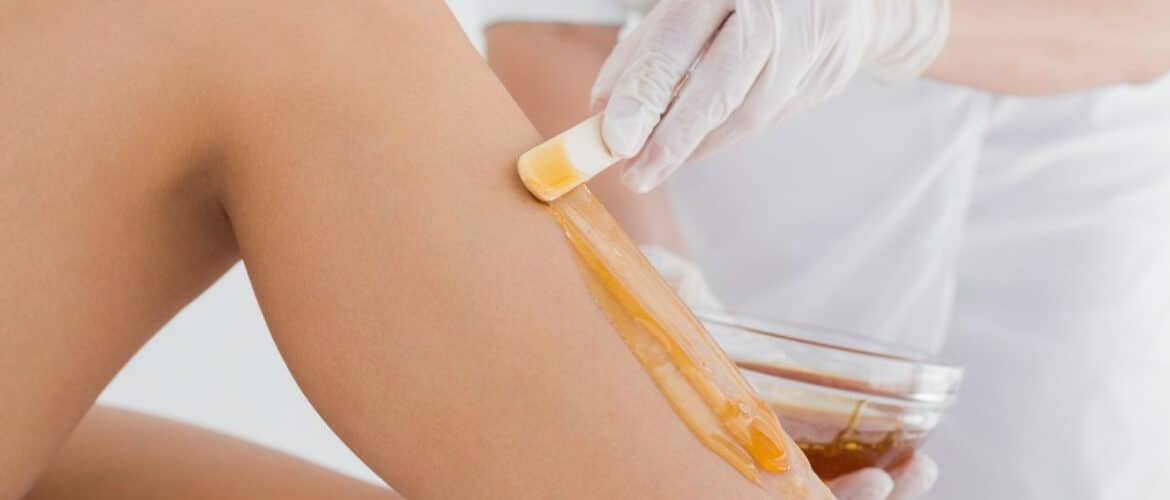
Waxing’s root-removal yields hair with tapered tips that rarely penetrate skin upon regrowth. The process strips away dead skin cells, providing built-in exfoliation. With results lasting 3-4 weeks versus shaving’s 1-3 days, skin experiences 78% fewer ingrown hairs and substantially less inflammation. For longer-lasting smoothness, professional women’s waxing services offer superior results.
Shaving vs. Waxing For Strawberry Legs Risk
Metric | Shaving | Waxing | Difference |
Skin Dryness (30 min post) | 7.8/10 | 4.5/10 | 42% less |
Ingrown Hair Frequency | 7.2/10 | 1.6/10 | 78% reduction |
Duration of Smoothness | 1-3 days | 3-4 weeks | 7-10x longer |
What Are The 5 Reasons Your Razor Causes “Strawberry Legs”?
Reason 1: Blunt Hair Tips Create “Pepper Dots”
Shaving slices hair at the skin surface, leaving blunt, dark cross-sections visible through translucent skin. These cut ends appear as concentrated black dots, creating the “pepper” effect, defining strawberry legs. Unlike waxed hair that regrows with fine, tapered tips, shaved hair remains thick and visible.
Reason 2: Clogged Follicles Form Comedone-Like Plugs
Shaving debris (soap, cream, dead skin) combines with sebum to plug hair follicles. When exposed to air, this mixture oxidizes and darkens, identical to blackhead formation. With 85% prevalence and 90% prevention effectiveness through exfoliation, clogged follicles represent the most common and most addressable cause.
Reason 3: Micro-Cuts + Friction Trigger Inflammation And Discoloration
Every razor pass creates microscopic abrasions triggering inflammatory responses. This produces painful redness and scarring (PFB), progressing to post-inflammatory hyperpigmentation, persistent brown spots remaining after bumps heal. This skin irritation after shaving signals your technique needs adjustment.
Reason 4: Shaving Too Close/Multi-Blade Effects → Ingrowns
Multi-blade razors lift hair before cutting, creating extra-short stumps that retract below skin surface. As hair regrows, the sharp tip pierces the follicle wall instead of emerging naturally, triggering foreign body reactions. Ingrown hairs affect 83% of strawberry legs cases.
Reason 5: Dull Blades + Poor Hygiene + Rushed Technique
Dull razors tug hair instead of cutting cleanly, maximizing follicle trauma and bacterial transfer. Blades beyond 5 shaves lose their edge and accumulate bacteria, transforming routine hair removal into repeated infection. This creates 70% prevalence of razor burn/folliculitis among affected individuals.
How Can You Prevent “Strawberry Legs” Based On The Exact Cause?
Target your specific issue, clogged pores need exfoliation, KP needs acids, ingrowns need technique changes, infections need rest.
Prevention effectiveness ranges 85-93% when properly applied. Learning how to prevent strawberry legs starts with identifying your trigger.
Group 1: Clogged Follicles – Use glycolic acid (8-12%) or salicylic acid (2%) 2-3 times weekly. Shows 93% prevention effectiveness. Consider professional facial treatments combining exfoliation with targeted therapies.
Group 2: Keratosis Pilaris – High-concentration glycolic acid provides sustained KP improvement in 5-year clinical studies. Non-cross-linked hyaluronic acid improves roughness and promotes proper hair shaft growth.
Group 3: Ingrown Hairs – Shave with short strokes in hair growth direction only. Avoid multiple passes over same area. Never stretch skin taut while shaving.
Group 4: Folliculitis – Best treatment: avoid shaving 1-6 months until condition improves. See dermatologist for prescription creams if unable to stop.
What Should You Do Before Shaving To Reduce Strawberry Legs?
Proper prep, warm water, gentle cleansing, chemical exfoliation prevents 90% of shaving-related follicle damage.
These shaving tips for smooth skin focus on prevention:
- Exfoliate 24 hours before with glycolic or salicylic acid 2-3x/week
- Wash with gentle cleanser to remove surface oils and bacteria
- Apply warm compress for 5 minutes (softens hair shafts, opens follicles)
- Apply shaving cream/gel and let sit 2-3 minutes before starting
Timing matters: Shave at the end of your shower after skin has softened from steam, not at the beginning when hair is stiff.
How Should You Shave To Minimize Dots And Bumps Right Away?
Three non-negotiable rules: sharp blades, with-the-grain direction, single-pass technique.
With-the-Grain Rules
- ✓ Shave in the direction of hair growth only (typically downward on legs)
- ✓ Use short, light strokes without pressing razor into skin
- ✓ Make only one pass per area
- ✓ Do not stretch skin taut while shaving
- ✓ Rinse blade after every 2-3 strokes
Why against-the-grain fails: Shaving opposite to growth lifts hair before cutting, creating ultra-short stumps that retract into follicles, guaranteeing ingrowns within 24-48 hours.
Blade Replacement
Factor | Recommendation |
Replacement Frequency | Every 5-6 shaves maximum |
Absolute Limit | Never exceed 5 uses |
Storage | Cool, dry place (not shower) |
What Should You Do After Shaving To Calm Irritation?
The 10 minutes after shaving determine whether follicles stay clear or become inflamed.
Post-shave care addresses micro-trauma and open follicles. For ongoing maintenance, explore these daily skincare tips between waxing sessions.
Post-Shave Protocol
- Rinse thoroughly with cool water
- Apply cool compress for 3-5 minutes (reduces inflammation, closes follicles)
- Pat dry gently
- Apply treatment products (salicylic/glycolic acid)
- Follow with moisturizer within 3 minutes
Ingredient Cheat Sheet
Active Ingredient | Concentration | Best For |
Salicylic Acid | 2% | Clogged follicles, active bumps |
Glycolic Acid | 8-12% | Dark spots, KP |
Lactic Acid | 5-10% | Sensitive skin |
Niacinamide | 5-10% | Dark spots, redness |
Avoid immediately after: Alcohol-based products, fragrances, retinoids, physical scrubs.
Is Waxing Better Than Shaving For Strawberry Legs?
Waxing delivers 78% fewer ingrowns and 7-10x longer smoothness, superior for chronic strawberry legs.
Ideal candidates:
- Those experiencing frequent ingrown hairs from shaving
- People tired of daily maintenance
- Anyone with chronic folliculitis or PFB from razors
Who should be cautious:
- Very sensitive skin prone to dermatitis
- Active infections or wounds
- Those on retinoids, accutane, or blood thinners
Timeline advantage: Waxing every 4 weeks means 12 sessions annually versus 100+ shaving sessions, dramatically less cumulative trauma.
What Alternatives Can Reduce Strawberry Legs Longer-Term?
Laser hair removal offers semi-permanent solution; electric razors provide less-irritating daily option.
Alternatives Comparison
Method | Duration | Strawberry Legs Effect | Cost |
Laser Hair Removal | 6+ months | Eliminates cause | $200-400/session (6-8 needed) |
Electric Razor | 1-2 days | Prevents ingrowns | $50-150 (one-time) |
Laser hair removal destroys hair at the roots, preventing regrowth and eliminating follicle irritation. The 810-nm diode laser shows effectiveness for both hair removal and treating keratosis pilaris in clinical trials. Requires 6-8 sessions spaced 4-6 weeks apart for a 90-95% permanent reduction.
Electric razors set to high guard prevent a close shave, causing strawberry legs. By leaving hair 1-2mm above the skin surface, you eliminate sharp tips and follicle penetration, triggering ingrowns.
What Are The Most Common Mistakes?
The #1 error: plucking or picking at ingrown hairs, which guarantees worse regrowth and permanent scarring.
Critical Mistakes to Avoid
- Plucking ingrown hairs – Increases chances of new hair regrowing into the skin, causes permanent hyperpigmentation
- Using same razor too long – Every shave past the 5-use limit exponentially increases bacterial transfer
- Shaving immediately after exfoliation – Strips too much of the skin barrier, leaving follicles vulnerable
- Storing razors in shower – Humid environments breed bacteria that transfer into follicles
- Expecting overnight results – Improvement requires 4-8 weeks of consistent adherence
What Are The Most Asked FAQs?
Typical Timelines to Improvement
With proper technique:
- 1-2 weeks: Reduction in new ingrowns
- 4-8 weeks: Visible texture improvement with keratolytics
- 12 weeks: Significant fading of dark spots
- 6 months: Maximum improvement from technique changes
With waxing:
- After 1st session: Immediate reduction in visible follicles
- After 2-3 sessions: 78% reduction in ingrowns
- After 6 months: Hair regrows finer and sparser
When to See a Dermatologist
Schedule appointment if:
- No improvement after 8 weeks
- Bumps become painful, swollen, or pus-filled
- Dark spots worsen despite treatment
- You develop scarring or keloids
Professional interventions: Prescription antibiotics, retinoids, chemical peels, medical-grade laser treatments.
What Is The Best Plan For Smooth Legs With Fewer Dots?
If You Keep Shaving
Daily protocol when necessary:
- Wash with gentle cleanser
- Apply warm compress 5 minutes
- Apply shaving cream, let sit 2-3 minutes
- Shave with short strokes in hair growth direction
- Avoid multiple passes
- Rinse with cool water
- Apply cool compress 3-5 minutes
- Apply treatment product + moisturizer
- Replace blade every 5-6 shaves
Weekly maintenance: Chemical exfoliation 2-3x/week, deep moisturizing 1x/week
Expected results: 40-60% reduction within 8 weeks of perfect adherence.
If You Switch To Waxing
Initial transition:
- Stop shaving, let hair grow 1/4 inch (2 weeks)
- Schedule professional appointment
- Exfoliate gently 24 hours before
- Avoid caffeine, alcohol, retinoids 24 hours before
- Book your appointment for consistency
Ongoing maintenance (every 3-4 weeks):
- Gentle exfoliation 2x/week between appointments
- Daily moisturizing
- No hot baths or intense exercise 24 hours post-wax
Expected results: 78% reduction in ingrowns, 3-4 weeks smoothness, hair regrows finer after 6+ months.
Your Path To Smooth, Strawberry Legs-Free Skin
Shaving doesn’t doom you to strawberry legs, but technique matters more than most realize.
The cause: Shaving creates blunt hair tips curving back into skin (83% ingrown prevalence), clogs follicles with oxidized debris (85% prevalence), and triggers inflammation darkening over time, particularly affecting people with naturally curly hair, including up to 60% of Black men who shave regularly.
The solution: Switch to waxing for 78% fewer ingrowns and 3-4 weeks of smoothness. If continuing to shave: replace blades every 5-6 uses, exfoliate 2-3x weekly with chemical exfoliants (glycolic or salicylic acid), always shave with the grain, and maintain complete pre/post-shave protocols.
The timeline: Expect 1-2 weeks for technique improvements, 4-8 weeks for keratolytics to improve texture, 12 weeks for maximum improvement from technique changes, or 6-8 laser sessions for 90-95% permanent reduction.
The path to smooth, spot-free legs is clear: commit to meticulous shaving protocols for incremental improvement, or switch to waxing for dramatic, long-lasting results. The science overwhelmingly favors methods addressing the root cause, literally.
Ready to say goodbye to strawberry legs? Book your professional waxing appointment today and experience the 78% reduction in ingrown hairs that shaving simply can’t deliver.

Genet Nemeth is the owner of SOS WAX and Skincare in Las Vegas. She loves talking about skincare and waxing with employees and clients. When not in one of her shops, you can find Genet enjoying a matcha tea ice cream cone at her favorite café.